How Maine Coon Color Genetics Are Inherited
How Are Maine Coon Color Genetics Are Inherited?
(A Behind the Scenes Look at the Science Behind the Fluff)
Let’s talk Maine Coon color genetics. This is the topic that usually starts as “oh that’s pretty” and very quickly turns into “wait how did that kitten come from those parents?”
If you have ever wondered why one litter can produce kittens that look completely different from each other, or why a breeder cannot always promise a specific color, the answer almost always comes back to genetics. Real genetics. Not marketing terms, not wishful thinking, and not whatever sounds good in a listing.
So let me walk you through this the same way I explain it to my buyers. Clearly, honestly, and without turning it into a college biology lecture.
The Basics of How Color Is Inherited
Every Maine Coon kitten inherits genetic information from both parents. That part is simple. What is not always obvious is that many coat traits are recessive, sex linked, or dependent on combinations of genes that do not always show visually in the parents.
This is why two cats can look one way and still produce kittens in colors you were not expecting.
At the most basic level, Maine Coon colors begin with a black based or red based foundation. From there, additional genes determine whether that base color shows as solid, tabby, silver, smoke, dilute, or a combination of these. It helps to think of color genetics less like mixing paint and more like layers being turned on or off.
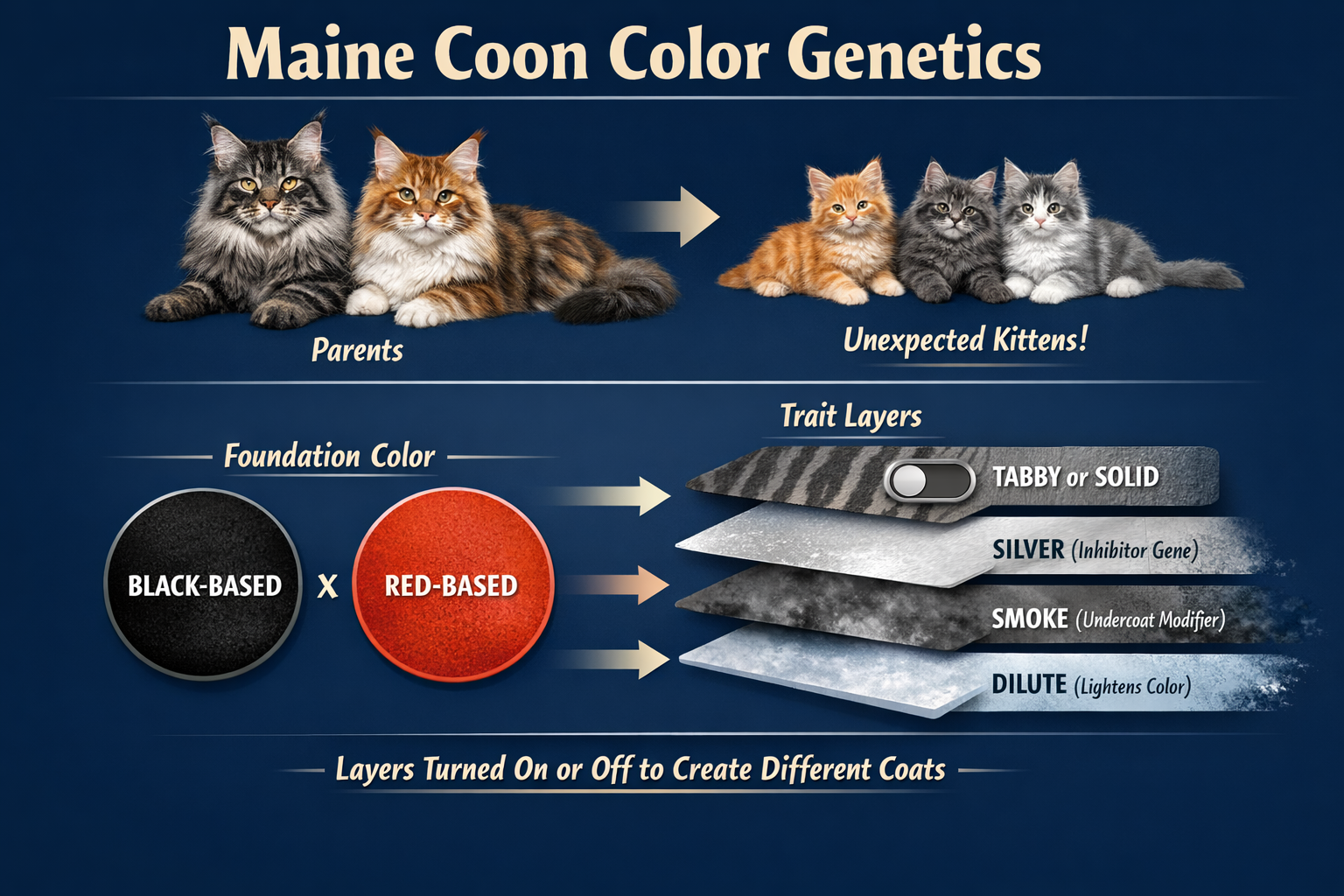
Red and Black The Foundation Colors
One of the most important things to understand is that the red gene is sex linked. This is why red and cream Maine Coons are more commonly male, and why females showing red often have a more complex genetic makeup.
Black based colors such as black, brown tabby, blue, silver, and smoke follow a different inheritance pattern. Once you understand which base colors each parent carries even if they do not visibly show them, many so called surprise colors suddenly make sense.
This is also why reputable breeders talk about what a cat carries genetically, not just what it looks like.
Tabby, Solid, Smoke, and Silver Explained
This is where things often get confusing.
Tabby, solid, smoke, and silver are not separate colors. They are patterns and modifier genes layered over a base color.
A tabby pattern determines striping.
A solid cat still genetically carries tabby. It is simply hidden.
The silver gene, also called the inhibitor gene, modifies how color appears by removing warm pigment from the hair.
This is where smoke and silver come in.
A smoke cat is genetically solid, also called non agouti, with the silver gene. The coat looks dark overall, but when the fur is parted or the cat moves, you will see a pale or silver root. This creates the dramatic smoky effect.
A silver cat is genetically tabby with the silver gene. The tabby pattern is still present, but the background color is lightened to silver instead of warm brown or gold. This is why silver tabbies have high contrast striping on a pale, cool background.
So in simple terms:
Smoke equals solid plus silver
Silver tabby equals tabby plus silver
This is why you will hear breeders use terms like black smoke or silver tabby. They are not inventing new colors. They are describing how multiple genes interact.
The DNA variant responsible for silver acts dominantly, meaning a cat can have one or two copies of the silver gene. You cannot determine this by coat appearance alone. Some breeders believe cats with two copies show less rufousing, or warm reddish tones, but this cannot be visually confirmed without genetic testing.
For breeding purposes, this distinction matters. A cat with two copies of the silver gene will produce only silver offspring, each carrying at least one copy of the variant. This allows for more predictable and intentional breeding outcomes.
Certain coats, including white, pointed, high white (van), dilute, red or orange, sunshine, extreme sunshine, and similar variations, can make it especially difficult to determine whether a cat is silver by appearance alone. Genetic testing is often the only reliable way to confirm silver in these cases.
What Does the Silver Gene (Inhibitor Locus) Do?
The silver gene works by blocking yellow and red pigment in the hair shaft, known as pheomelanin. It does not control how wide the light or dark bands are, only the presence of warm pigment.
Because of this:
Solid cats with the gene appear smoke
Tabby cats with the gene appear silver tabby
Very wide pale bands may appear chinchilla
Intermediate banding appears shaded
What Does “Inhibitor Locus” Mean?
Inhibitor is the original name given to the gene responsible for silver coloration.
The word locus simply refers to a specific position on a chromosome.
Researchers know where the silver variant is located, but the exact gene and its full function are still being studied. Despite this, the genetic test for silver is reliable and widely used by ethical breeders to clarify complex or visually ambiguous coats.
Smoke vs Silver Tabby: How to Tell the Difference
One of the most common points of confusion for buyers is the difference between a smoke cat and a silver tabby, especially when a coat appears dark but shows lighter roots or faint patterning.
Genetically, the distinction is straightforward. A smoke cat is non agouti, meaning it is solid based, with the silver gene present. The silver gene lightens the base of each hair shaft, but because the cat is genetically solid, no true tabby pattern is expressed. Smoke cats typically appear dark overall and reveal their silver only when the coat is parted, the cat moves, or the fur is blown open. This contrast between dark tips and pale roots creates the dramatic smoky effect.
A silver tabby, on the other hand, is agouti, meaning genetically tabby, with the silver gene modifying the coat. In these cats, the tabby pattern is fully expressed, but the background color is lightened to silver rather than warm brown or gold. This results in high contrast striping that remains clearly visible across the body, legs, tail, and face, even when the cat is at rest.
If a cat consistently shows visible tabby markings such as body striping, leg bars, tail rings, or defined facial markings, it is genetically tabby. When combined with the silver gene, this makes the cat a silver tabby, not a smoke.
One source of confusion comes from ghost tabby markings, which can appear in kittens or young cats, particularly in black smokes. These faint shadow patterns are normal and reflect the fact that all cats genetically carry tabby. In true smoke cats, these markings typically fade as the coat matures and should not remain bold or clearly defined into adulthood.
In simple terms, smoke cats do not display a true tabby pattern, while silver tabbies do. The presence or absence of consistent, visible striping is the key distinction. Understanding this difference helps buyers better interpret coat descriptions and allows breeders to communicate color classifications accurately and transparently.
Dilute Versus Non Dilute
Dilution is one of the easier concepts once it clicks.
If a kitten inherits the dilute gene from both parents, black becomes blue and red becomes cream. If only one parent carries dilute, the kittens will not visually show it but they may still carry it.
This is why two non dilute cats can still produce dilute kittens if both parents are carriers. It is also why ethical breeders track and test genetics instead of guessing.
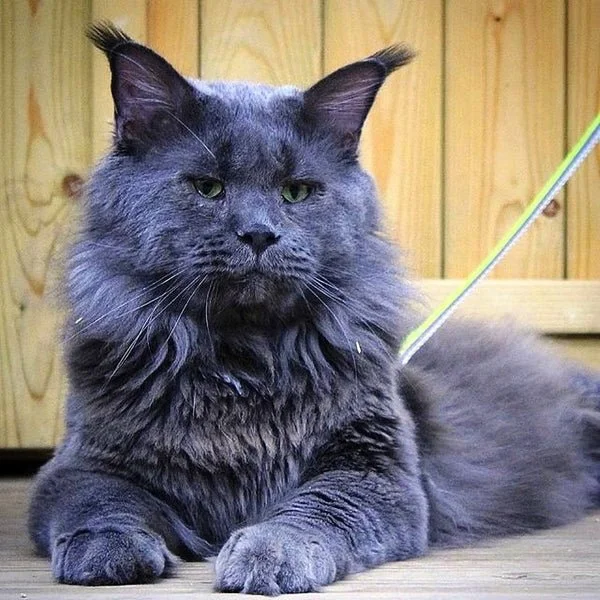
Blue Maine Coon
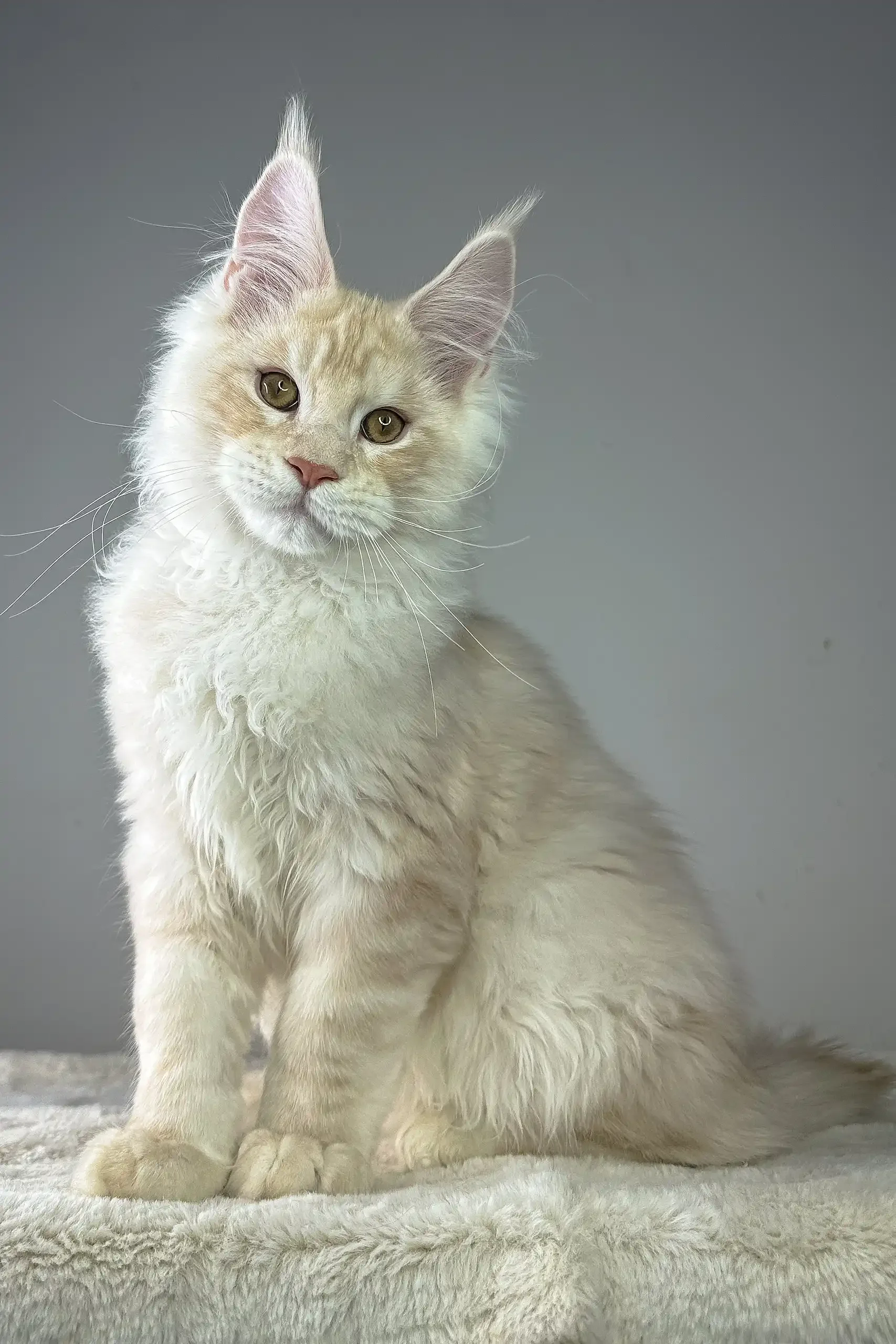
Crème Maine Coon
Rare Colors and Why They Are Often Misunderstood
This is where marketing tends to get louder than science.
Some colors are less common due to how genetics work. That part is true. But rarity alone does not make a cat healthier, better, or more valuable as a companion.
Color inheritance follows probability, not prestige. When kittens are priced solely based on color without explaining the genetics behind it, education has usually taken a back seat to hype.
Understanding inheritance helps buyers separate genuinely uncommon outcomes from buzzwords designed to inflate prices.
Why Breeders Cannot Guarantee Exact Colors
This is one of the hardest things for buyers to accept, but it is also one of the most important.
Even when you fully understand the genetics of both parents, you are still working with probabilities, not certainties. Nature always gets the final say.
A responsible breeder can tell you what is possible, what is likely, and what is unlikely. Anyone guaranteeing a very specific color every time is either oversimplifying or being dishonest unless its very specific pairings with know color. Like two solid black’s with no other traits will have all black kittens.
Final Thoughts From Me to You
Maine Coon color genetics can feel intimidating at first, but once you understand the basics it becomes genuinely fascinating. It is part science, part probability, and part respect for how complex this breed truly is.
Color is fun. Genetics are powerful. But neither should ever matter more than health, temperament, and ethical breeding.
A beautiful Maine Coon is not defined by color alone. It is defined by the care, knowledge, and responsibility behind it.