Breeding to the Maine Coon Standard
If you hang around Maine Coon spaces long enough, you’ll hear some version of this:
“American Maine Coons are cute, but European lines are more impressive.”
I’m not interested in tearing down anyone’s cats. I’ve seen stunning animals from all over the world. What I do care about is the bigger picture: what we’re selecting for, and what that selection does to a breed over time.
Because this conversation isn’t really about a map. It’s about breeding priorities, whether we’re aiming for a balanced Maine Coon that fits the blueprint, or chasing a look that’s currently getting the most likes online.
And yes, this fits right into Genetics Month, because this is genetics in action: selective breeding shaping the population.
The short version
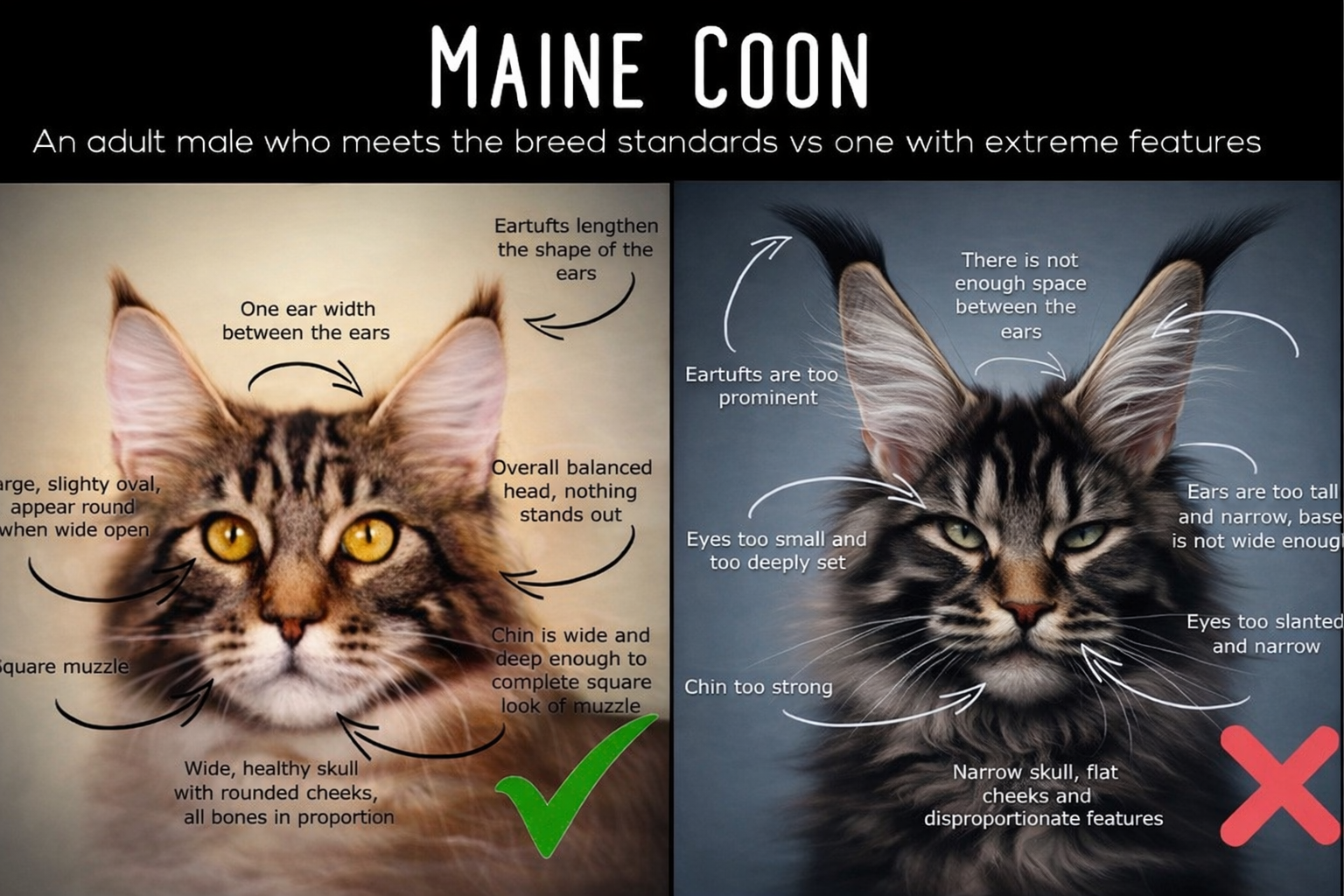
Breeding to the standard matters because a standard is a built in reality check. It’s designed to protect the breed from sliding into extremes by emphasizing proportion, harmony, and overall function instead of rewarding one oversized feature. When breeders repeatedly choose more extreme traits such as longer muzzle, bigger ears, harsher expression, or bigger everything, those traits can compound across generations. The result can be a cat that looks dramatic, but drifts away from balance and sometimes away from what ages well.
What a breed standard really is and why it’s not just show people stuff
A breed standard is basically a shared definition of what the Maine Coon is meant to be. Not a trend forecast, more like a guardrail.
Most standards, even when worded differently, circle the same principles:
Overall balance at a glance
Proportions that work together, including head, muzzle, ears, body, and bone structure
Nothing that screams this feature is the entire point
That’s why you see language like no part exaggerated. It’s not about being boring, it’s about keeping the Maine Coon recognizable and well built.
Why this belongs in a genetics series
When we talk genetics, people think coat colors because they’re easier to visualize. But breeding decisions affect everything.
Coat traits are often driven by a handful of genes you can track. Type, meaning head shape, ear set, muzzle, bone, body length, and profile, is usually polygenic, which means lots of genes working together.
That means you don’t flip a switch to get a look. You push a population gradually by picking cats with a certain style over and over.
So when the market rewards extremes, the breeding direction can change fast, even if nobody set out to change the breed.
What I mean when I say I love American Maine Coon type
When I picture an American Maine Coon, I’m thinking of a cat that looks like it could’ve always existed:
Strong rectangular body without being awkward or overdone
Substantial bone and presence without looking heavy or clumsy
A head and muzzle with definition that still stays proportional
The classic rugged, capable vibe Maine Coons are known for
To me, that’s the magic: impressive without trying too hard. It’s a type that doesn’t need exaggeration to stand out.
Where European marketing gets messy and what I’m actually critiquing
Let me be really clear: Europe doesn’t equal exaggeration. There are European breeders producing beautifully balanced cats.
What I’m talking about is the internet version of European, the sales pitch that treats extremes like a badge of honor.
The most common hype points I see pushed are:
The longest muzzle or high cheekbones
The tallest ears that are misshaped
The most wild or feral face
The “Grinch” face
Bigger, bigger, bigger
My issue isn’t that those features exist. It’s the mindset of chasing the farthest edge of the spectrum as the goal, because standards don’t reward extremes. They reward an overall picture that works.
The health side of this without fear mongering
I want to say this responsibly.
Having a dramatic looking cat doesn’t automatically mean it’s unhealthy. But breeding programs that prioritize extremes can create risk, because when one trait becomes the obsession, other priorities can slide.
Here’s what I mean in plain terms.
Balanced cats tend to hold up better long term
Maine Coons are large. That’s part of the appeal. But size is only good when the cat has the structure to support it.
When bigger becomes the primary selection goal, it can put pressure on:
Overall conditioning, because big isn’t the same as fit
Movement and comfort as the cat ages
The need for strong skeletal and muscular support
A good program isn’t just producing big cats, it’s producing cats that stay sound.
Extremes can bring practical tradeoffs
Even if a trait is cosmetic, it can influence function indirectly.
An overly narrow or overly elongated head style can sometimes go hand in hand with bite alignment issues in certain lines. Bite issues are not just cosmetic, teeth matter.
When the upper and lower jaw do not meet the way they should, it can create a ripple effect. Cats can still eat, but they may have uneven tooth wear over time, certain teeth may sit in the wrong place and rub soft tissue, and plaque and tartar can build up faster in areas that do not self clean well. In some cases it can also make routine dental work more complicated because the mouth does not have the spacing and alignment you want. This is just one example of a negative that can occur from changing the structure of the cat without being thoughtful.
When one feature dominates selection, overall harmony can suffer, and that’s usually when you start seeing structural inconsistency.
I’m not claiming extreme look equals guaranteed health problem. I’m saying extreme first selection increases the chance of tradeoffs if the program isn’t disciplined.
Standards help prevent tunnel vision
The best programs I’ve seen anywhere tend to lead with:
Temperament
Structural quality and balance
Ethical screening and testing appropriate for the breed
Then aesthetics on top
Standards help keep the priorities in that order, instead of becoming whatever sells fastest.
My breeding philosophy
I’m not trying to create the most dramatic face on Instagram. I’m aiming for Maine Coons that look like Maine Coons because they’re built right: balanced, confident, substantial, and bred with health, temperament, and honesty at the center.
And to me, the American Maine Coon embodies that perfectly, already a gentle giant the largest domestic cat, what else could you ask for?
Standard vs Trend: a quick buyer checklist
Green flags
The breeder can explain what standard or type they’re breeding toward
They talk about the whole cat, structure, temperament, and health, not one feature
They can speak clearly about screening and testing and general program priorities
Their cats look consistent across generations, not constantly pivoting to whatever’s viral
Red flags
Every message is more extreme than anyone else
The entire pitch is ears, muzzle, or feral expression
They get defensive about health questions
They sell extreme like it’s automatically superior
Final thoughts
that is exactly why people love them the way they do. A Maine Coon looks like something out of a storybook with the tufted ears, the heavy coat, the big plume tail, and that confident presence that makes you do a double take. But then you live with one and you realize the real “wow” is not just the look. It is the personality. They tend to be smart, curious, and involved in your daily life. A lot of them follow you room to room like a little supervisor, learn routines quickly, and communicate in the most adorable way with chirps and trills instead of constant meowing. They give you that gentle giant energy where they feel substantial and impressive, but still sweet and people focused.
That history is also why I care so much about breeding to a standard. The Maine Coon became iconic without needing exaggeration. The standard protects what made the breed special in the first place, balance, proportion, and a functional build that holds up over time. When people are not thoughtful, we risk losing the very traits that made the Maine Coon so cool to begin with.